
The Glory of Ceylon
An island shaped by ancient geology, maritime trade and generations of miners, cutters and jewellers — home to sapphires and coloured gemstones celebrated across the world.
Ceylon is a historic name. Sri Lanka is the living story.
For the modern nation, we use Sri Lanka. In the international gemstone trade, “Ceylon” remains an historic origin term associated especially with sapphire — a bridge between the island’s past and the stones valued today.
Sanskrit tradition remembered the island as Ratna-Dweepa, the “Island of Jewels”. Arab merchants called it Serendib, a name that helped inspire the word serendipity. Across centuries, Sri Lankan gems travelled with sailors, traders, diplomats and royal courts, carrying the island’s reputation far beyond the Indian Ocean.
Two millennia of discovery and exchange
The story is larger than any single stone: geology, local skill and global trade meet on one island.

Ratna-Dweepa
Sri Lanka’s gemstones entered written memory and maritime trade more than two thousand years ago. The island became renowned for sapphire, ruby-like corundum, beryl, garnet and other coloured stones.
Serendib and the sea
Arab, Persian, Indian and later European traders linked the island to courts and markets around the Indian Ocean. Marco Polo’s thirteenth-century account also noted its abundance of precious stones.
A global trade name
Under the name Ceylon, the island’s bright blue sapphires became widely known in international jewellery. The historic term remains part of gem-trade vocabulary after the country adopted the name Sri Lanka in 1972.
Heritage with evidence
Modern Sri Lankan gem commerce combines traditional field knowledge with precision cutting, independent laboratory reports, export controls and international client service.
Ancient rock, monsoon water and patient hands
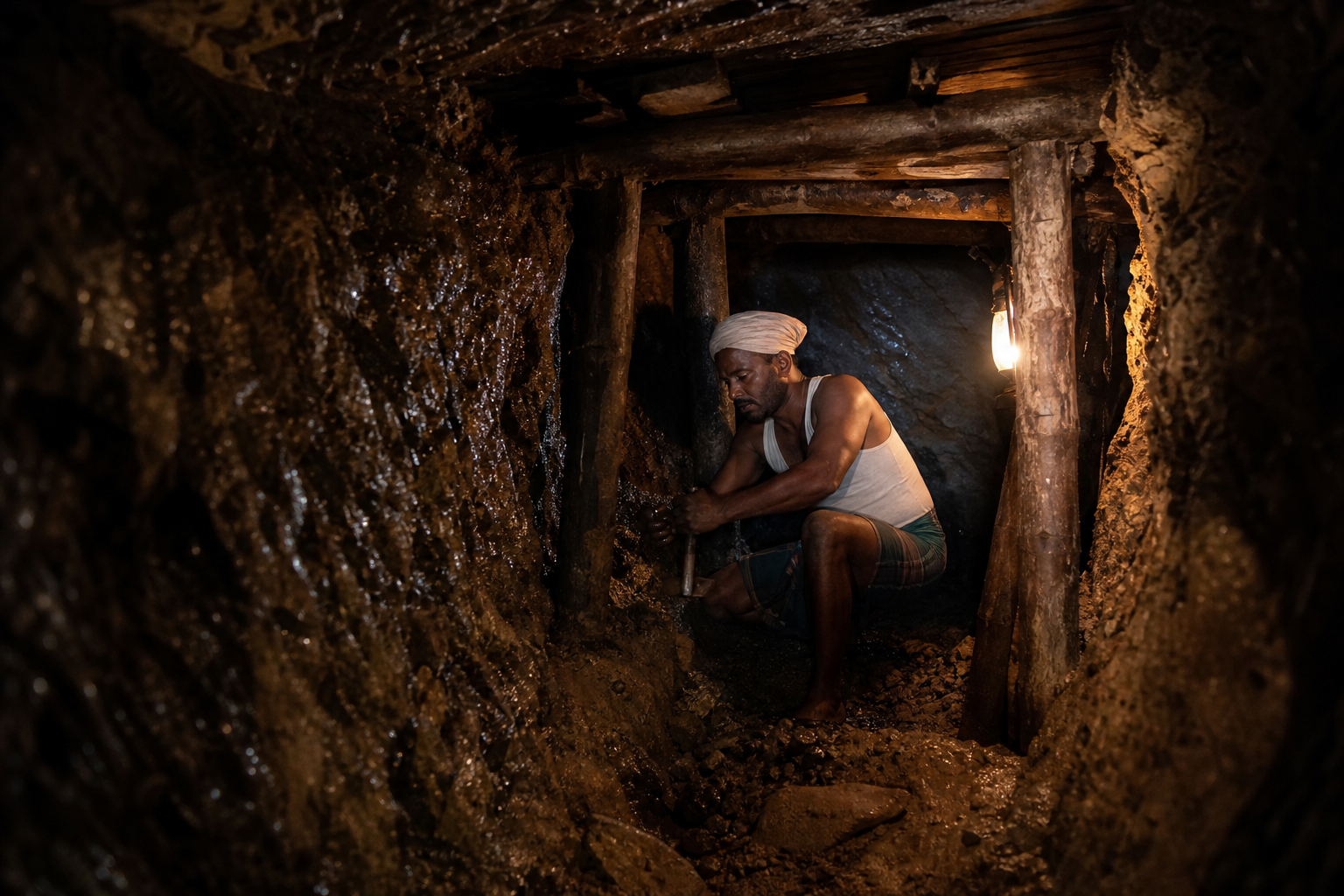
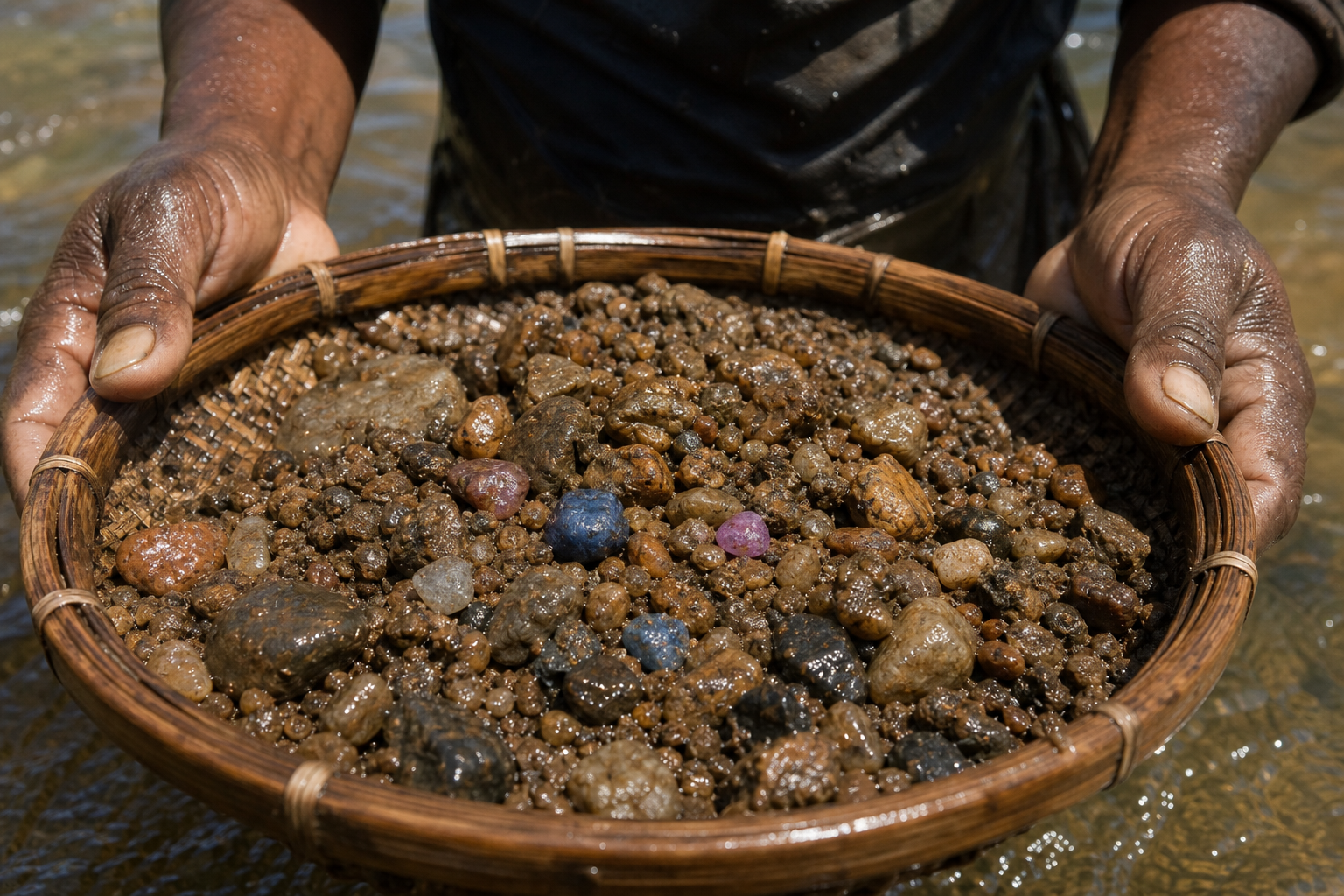
Sri Lanka’s central highlands contain ancient metamorphic rocks formed through immense geological events. Weathering released resistant gem crystals, and water carried them into valleys where they settled in alluvial gravel beds. Miners call the gem-bearing layer illam.
Much of the work remains small-scale. Timber-supported pits, hand tools and woven baskets connect modern mining with generations of practical knowledge. The image can appear romantic from a distance, but gem recovery is skilled physical labour and should be represented with dignity, safety and fair economic context.
Ratnapura is the most famous centre, but the island’s gem country extends through Balangoda, Elahera and other localities. A laboratory origin opinion may support “Sri Lanka” when microscopic and chemical evidence aligns with reference data; no single visual feature proves origin by itself.
How certification and origin reporting workAn island of many treasures
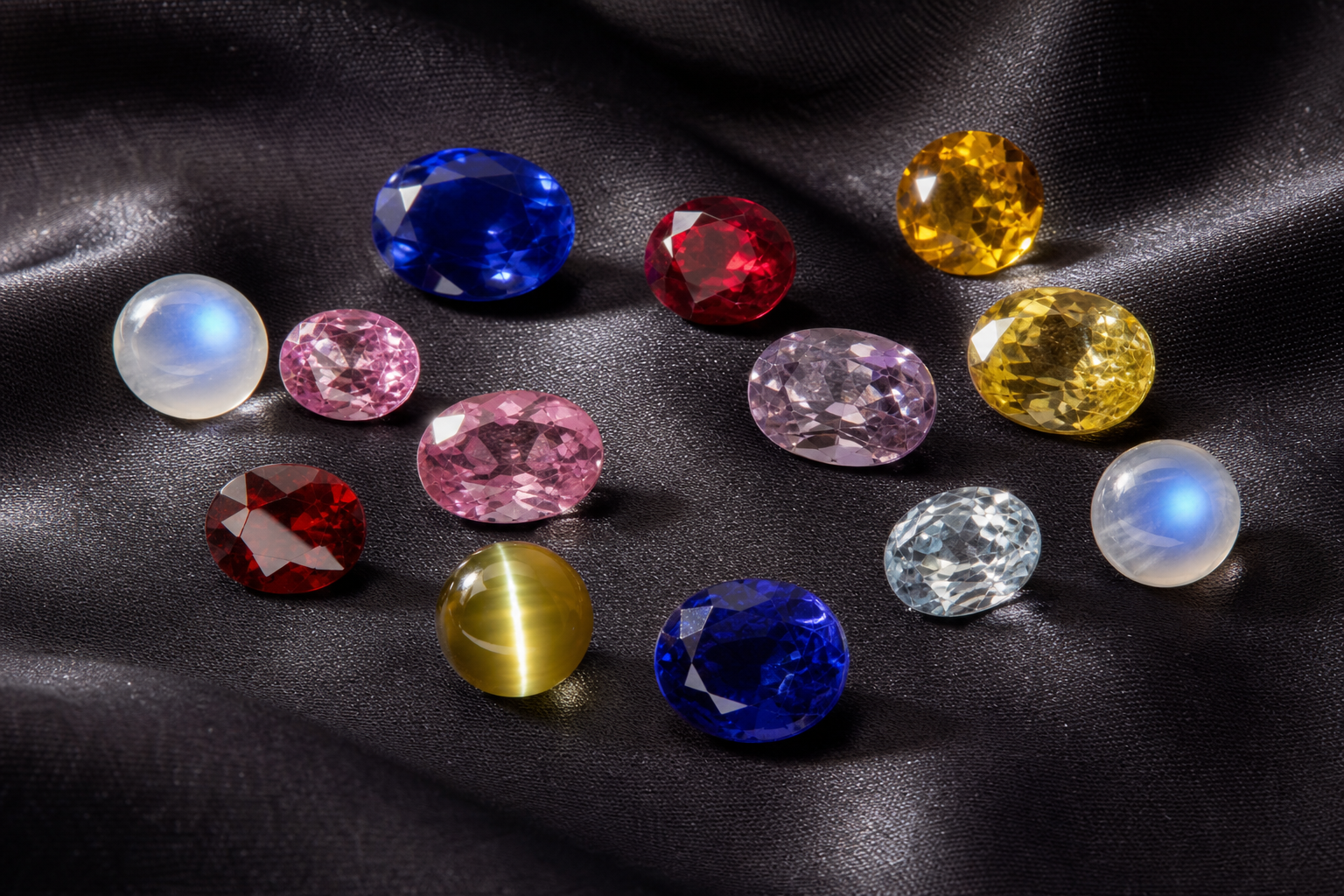
Sri Lanka is one of the world’s unusually diverse coloured-gem sources. Availability and quality vary, and origin should be independently supported where commercially important.
Sapphire & ruby
Corundum appears in blue, pink, yellow, white, violet, orange-pink padparadscha and red ruby, as well as star-forming material rich in silk.
Chrysoberyl
Sri Lanka is noted for transparent chrysoberyl, colour-changing alexandrite and cat’s-eye stones showing a sharp band of light called chatoyancy.
Spinel
A durable gem in red, pink, lavender, violet and blue; historically confused with ruby before modern mineral identification.
Zircon
Natural zircon can show exceptional brilliance and fire in colourless, blue, honey, green and reddish hues. It is unrelated to synthetic cubic zirconia.
Garnet
Warm hessonite and deep almandine are among the garnets associated with the island’s gem gravels and jewellery traditions.
Moonstone & tourmaline
Sri Lankan feldspar may display moon-like adularescence, while tourmaline contributes green, pink, brown and multicoloured crystals.
A gemstone is found once, then revealed by craft
The cutter must interpret rough crystal rather than impose a standard shape upon it. Colour zoning, fractures, silk and crystal direction influence orientation. Preserving weight matters, but so do brightness, face-up colour and durability.
Jewellery adds another layer of judgement. A setting should protect vulnerable edges, allow the colour to breathe and suit the rhythm of the wearer’s life. Good merchandising therefore describes not only carat weight and price, but dimensions, cut behaviour, treatment, report status, setting suitability and care.
Discover the bespoke process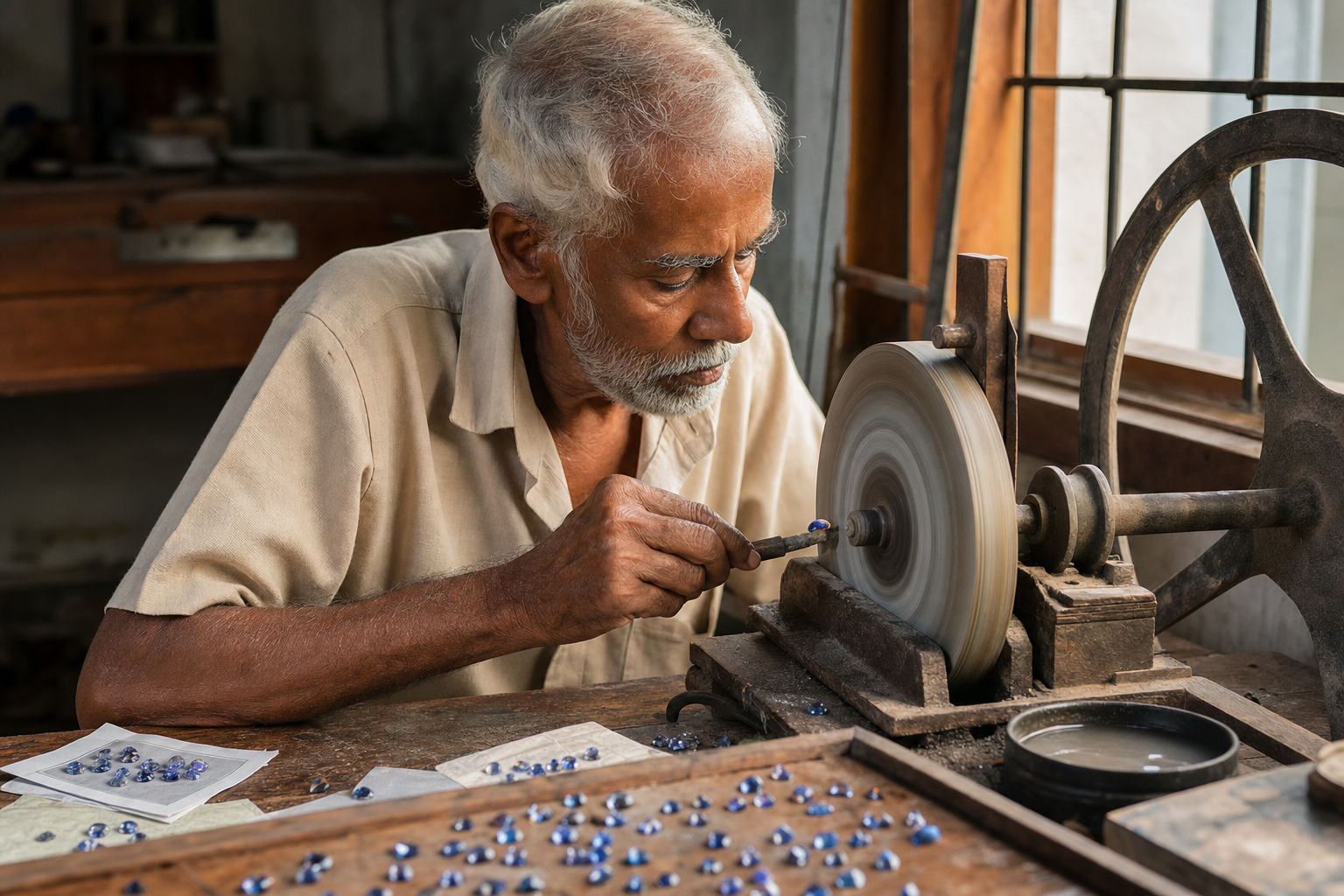
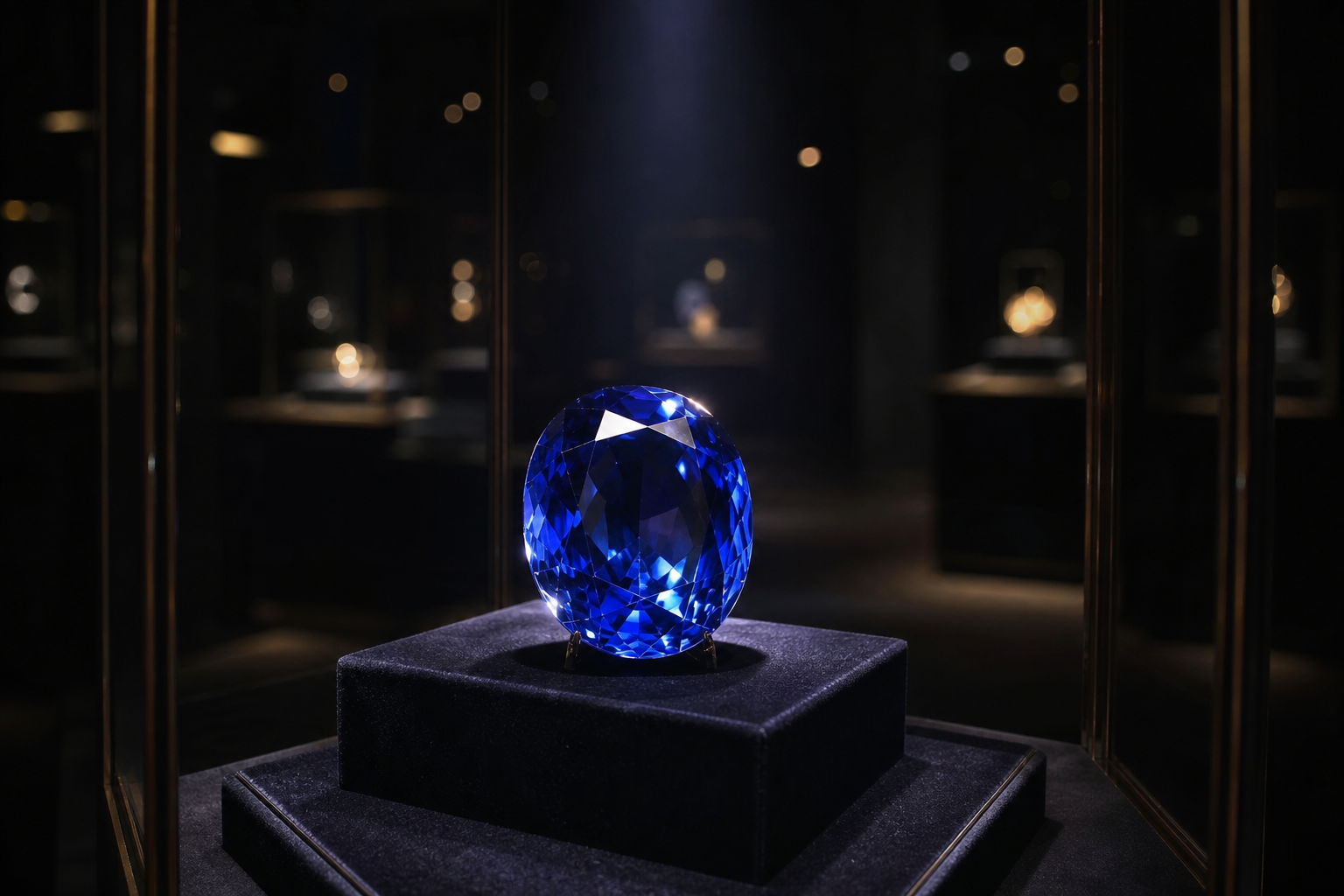
From museum galleries to royal memory
The island has produced stones whose scale and character entered public history. The Smithsonian’s 423-carat Logan Sapphire was cut from Sri Lankan crystal. The 392.52-carat Blue Belle of Asia, discovered near Ratnapura in 1926, later set an auction record when sold at Christie’s in 2014. GIA records the 563-carat Star of India as discovered in Sri Lanka despite its famous name.
The approximately 12-carat blue sapphire engagement ring first worn by Diana, Princess of Wales, and now by Catherine, Princess of Wales, is widely documented by gemmological and Sri Lankan industry sources as a Ceylon sapphire. Its enduring visibility helped renew international demand for sapphire engagement rings.
Read the detailed Ceylon sapphire guideTo propose, celebrate, remember and pass forward
A meaningful choice joins practical suitability with the wearer’s colour, character and occasion.
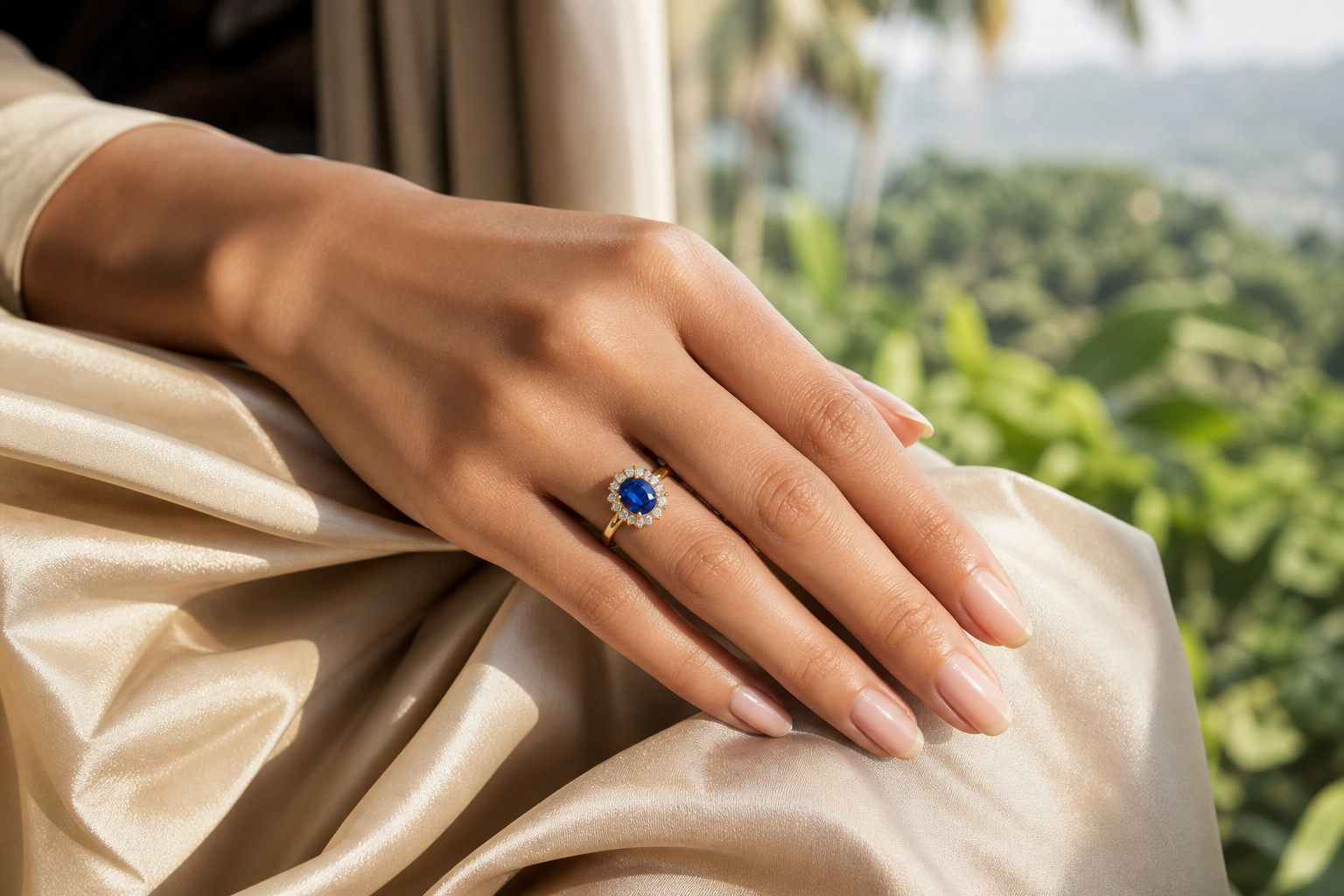
Engagement & proposal
Sapphire offers excellent durability for regular wear. Choose the stone first when colour and rarity matter most; choose the ring first when timing and design certainty lead.
Birthdays & anniversaries
Sapphire is September’s birthstone and is traditionally linked with fidelity. Coloured gems can also mark personal milestones without following a fixed formula.
Daily colour
Smaller sapphires, spinels and chrysoberyls work beautifully in earrings, pendants and protective ring settings designed for frequent wear.
Heirloom commissions
A documented stone, repairable construction and timeless proportions create jewellery that can be understood and cared for by the next generation.
What people have asked stones to represent
Across cultures, gemstones have been worn as symbols of fidelity, protection, courage, prosperity, memory and spiritual focus. Blue sapphire is often associated with wisdom and loyalty; yellow sapphire with learning and abundance in South Asian astrology; ruby with vitality; emerald with renewal; and moonstone with cycles and intuition.
Modern chakra practices often pair gemstone colour with meditation or personal intention. These are cultural, spiritual or individual beliefs — not conclusions of gemmology or medical science.
Choose a stone with meaning and evidence
Explore the collection or ask Angelite to source a Ceylon gemstone for an engagement, gift or heirloom commission.